The body was three days old and had walked eleven miles.
Iska Morrow crouched beside it in the verge grass, where the grass had gone yellow at the road's edge and the wind had laid the dead man on his side. He was face-down. His right shoulder was up, his left was down, and his knees were drawn a little, as if he had lain down to rest.
She had been walking since second light. Her spade was in her right hand and her sod-cutter was in her left, and her cord was under her shirt. The cord had ninety-one knots in it. Each knot was a fresh verge-grave her people had dug this season. The count was growing faster than any season before.
She set the spade down.
Her hands were steady. They had not always been. The steadiness had come the way calluses come — one grave, then another, then ninety-one.
She turned the body over.
She did it with two hands and no ceremony. Ceremony was for the graveside. The turning was work. The dead man's face came up out of the grass matted with the tussock and printed with its pattern, and his mouth was full of the black earth of the verge, and his eyes were half open and the flies had done their work on the whites.
He was maybe forty. He wore no coat. He wore a shirt that had been white once and had gone the color of the road. His feet were bare. The boots that he must have had on the road had been taken off him — by whoever had put the bolt in his back, or by whoever had walked past him in the two days since. Iska looked at the feet. The feet were the reason she was down on her knees on the verge and not up walking. She had seen the feet from the road.
The feet were flat-arched and horn-soled at the heel and the ball. The horn on the heel was thick and old. The horn on the ball was thicker and older. The skin between was cracked in the pattern of the crack a Farer gets from twenty years of walking on the road that his people were born to walk. He had been a Farer.
She took his left hand.
The left hand was hard. The palm was calloused not with a hoe, not with a rope, but with the small callous a walker gets from carrying a pole in his left hand on the long miles. The pole was not there. The pole had been taken too. She turned the hand over. She read the joints. The joints were the joints of a man who had walked more miles than she had heard of any man walking. The knuckles were smooth. The wrist was thick. The forearm above the wrist was ridged with the little muscle a man builds carrying a small weight over a long time.
She let the hand down.
She read his boots that were not there. She read the imprint on the calluses. She read the last miles in the shape of the wear. Then she read the wound.
The wound was in his back, under the left shoulder blade. A bolt. A short bolt, from a horse-crossbow, from a rider going by at a walk. The rider had not stopped. The rider had put the bolt in and had gone on, and the man had walked eleven more miles with the bolt in his back, and had turned off the road, and had lain down in the tussock grass, and had died there face-down with the black earth in his mouth.
She read the eleven miles in the calluses under the wound. The heel had thickened for eleven miles under the pain of the shoulder — the man had shifted his weight under the pain, and the walk had gone into his heel. She read the eleven miles as if they were a written thing. She read the direction. The direction was north-northwest. The direction was Lowmoot.
“Eleven miles,” she said. She said it low.
He had been walking to Lowmoot.
She had been carrying the shape of the Spine in her pack for three weeks now, and the shape was a shape you did not see unless you laid the cord down along a map. She was going to show them at Lowmoot. She was going to ask them to walk in chains. This man would be knot ninety-two.
She went through his clothes. The shirt pockets were empty. The belt was gone with the boots. She turned him on his side again and looked at the collar. The collar had been re-stitched. She ran her thumb along the stitching. A fold of leather was sewn into the seam.
She cut the stitching with her sod-cutter. The leather was a strip no wider than two fingers, folded twice, waxed on the outside. She unfolded it. Inside was a scrap of bark-paper, the kind Farers used on the road because bark-paper held in rain and rolled small. The writing on it was Farer script — not words but distance-marks. Settlements. A date-mark three weeks old.
She read it twice.
The marks said the seventh camp had moved. The seventh camp, which Caddow's last count had placed at seven hundred and eighty-three miles from Lowmoot, was now at seven hundred and nineteen. Sixty-four miles in three weeks. The road had walked sixty-four miles while the councils talked and the muster counted grain.
Sixty-four miles.
She folded the bark-paper and put it inside her shirt, against the cord.
She looked up at the sky. The sky was gray. Rain would come tonight, or would not. She looked north-northwest. The man had walked eleven miles with a bolt in his back to bring this count to Lowmoot. The bolt had not stopped him. The road had stopped him.
• • •
She dug the grave.
She dug it in the verge. The verge was the road's edge and it was the road's, and she did not need to ask any farmer's leave to dig. The soil was black and cut clean. The spade went in and came out. She dug six spade-widths long and three deep. She lifted the body under the arms and dragged it to the grave and laid it in and straightened it and set his hands folded on his chest and took the grass out of his mouth with her thumb.
She sang the mile-song.
She sang it low. The wind was low and her voice was low and the two matched, and the song ran straight and quiet. She sang the walker home. She sang the eleven miles she had read in his calluses. She sang the direction, north-northwest to Lowmoot. She sang the last hour in the tussock grass. She sang the fact of the bolt.
She did not sing the rider.
Then she buried him. She filled the grave and patted the earth flat and cut the sod she had laid aside and set it back over the fill, and in three days the grass would grow back into the seams and there would be nothing to see. The Barrowkin did not mark graves. Marking made a grave stealable.
She did not stand.
She crouched by the fill. The earth was cool where she had patted it flat. She put her hand inside her coat.
The cord came out warm from her body. It was hemp. It was thick as a thumb. The knots along it were the shape of the Spine.
She did not count them all. She had counted them all before, on other roads, on other verges. The counting was long. She did not have the miles today.
She ran her thumb along the cord. She found the knot at forty-one.
Forty-one was a Cindered ropewalker. He had been sixty. He had been walking north from the flues with a coil of tarred hemp on his shoulder. The rope had been for the muster at Farr.
He had been found in a ditch with the rope gone. His palms were up. His hand-print was gray on the ditch-stone.
His name was Bael.
She found the knot at seventy.
Seventy was a Delf water-boy. He had been nine. He had been on the Lowmoot road with a wooden yoke and two buckets. The buckets had been for the surgeon's tent.
He had been found by the yoke. The yoke had fallen across his chest. The buckets had been taken.
His name was Naill.
She found the knot at eighty-nine.
Eighty-nine was a Varen thresher's wife. She had been forty-four. She had been walking east on the harvest road. She had carried a bundle of winnowing-cloths under her arm. The cloths had been for the muster's grain-count.
She had been found under a hedge with her shoes on. The cloths were gone. The winnowing-poles were gone.
Her name was Meret.
Iska said the three names to the empty road.
“Bael. Naill. Meret.”
She said them low. The road took them the way a road takes anything laid on it. Plain. Level. Going on.
Then she said, “The Farer.”
She said it because she did not have his name. She would ask for it in Lowmoot. If his people were there, she would knot his name into the cord after his knot, on the tail-end where the un-named went.
“Ninety-two.”
She held the cord a moment longer. She read the knots with her thumb — the small ones for the children, the doubled ones for the old, the plain ones for the walkers in between. Each was a person. Each knot she had tied herself, with the earth still on her hands.
She put the cord back inside her coat. It went cold against her ribs.
She stood. She wiped her hands on her thighs. She took the sod-cutter in her left hand and the spade in her right and stepped back onto the road.
• • •
Mereck was at the road's next bend.
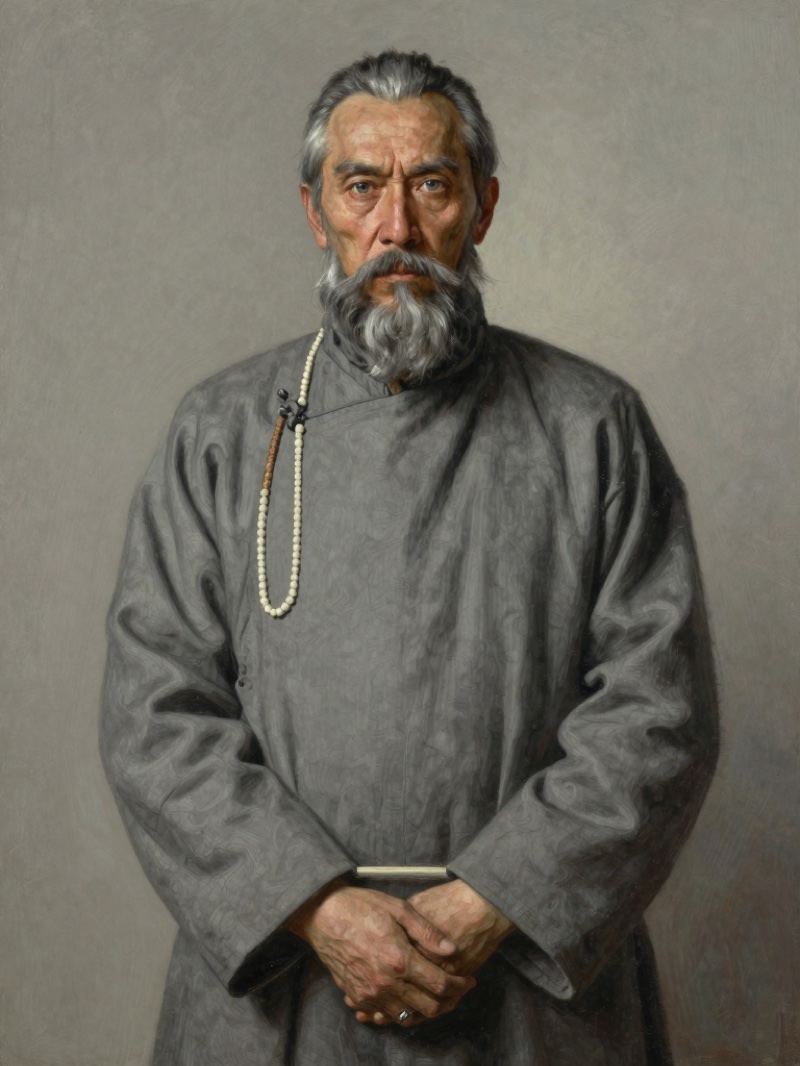
He was sitting on the milestone. The milestone had been recut for miles-to-Cazan seven seasons back, and Mereck had scraped the recut off with his knife the last time he had come through, and the milestone read Lowmoot now again, though the letters were shallow. He was a lean man with a spade over his shoulder and his coat long and gray. He was fifty. He had sat the far side of a burned room in Sarnesse two years ago and had said not one word all night, and he had walked out of Sarnesse the next dawn and had never gone back.
He stood when he saw her.
He fell in beside her. He did not speak. She did not speak either. They walked. His stride was longer than hers, but he had walked with her enough that the strides matched now, and neither of them thought about it.
They walked a mile.
“The council?” Mereck said.
“The knotted cord.”
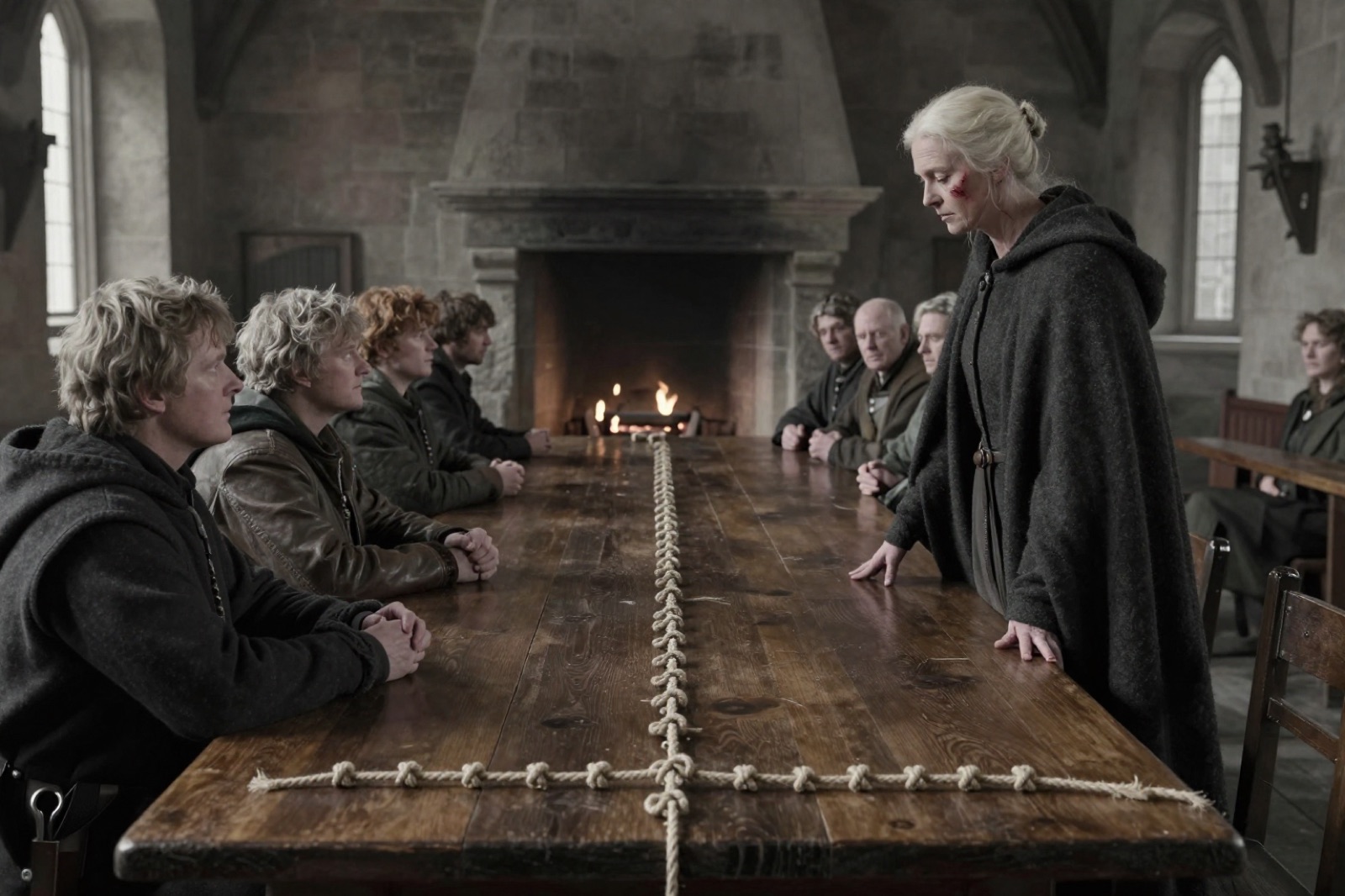
He nodded. She had been carrying the knotted cord in her pack for three weeks now. The cord was a hand-thick coil of hemp rope with ninety-one knots in it. The knots ran in a sequence and the sequence was the shape of the Spine, and the shape of the Spine was the shape of the war, and she was going to lay it on a table in Lowmoot and show them what she had been trying to show them for four seasons.
She stopped walking.
Mereck stopped beside her. She reached inside her shirt and brought out the bark-paper. She unfolded it. She held it where he could read it.
Mereck read it. His face did not change. His hand came up and rested on the spade-handle, and the knuckles went pale around the wood.
“Sixty-four miles,” he said.
“In three weeks.”
“The seventh camp.”
“At seven-nineteen.”
He looked at the road. He looked north-northwest, toward Lowmoot and the councils and the muster that had been counting grain while the road walked sixty-four miles.
“They will not believe you,” he said.
“They do not need to believe me. They need to count.”
She folded the bark-paper and put it back inside her shirt. She started walking again. Mereck walked beside her. The road went on. The wind came up a little from the north.
The road was two seasons closer than the councils had counted. She walked faster.